From office removals to complex commercial relocation projects, Bishop’s Move manages business relocations across the UK, delivering every move on time, within budget and with minimal disruption.
Moving from France to the UK is a big step, but with a little planning, it doesn’t have to be complicated.
Whether you’re relocating for work, family, or a fresh start, understanding the key steps, like timelines, paperwork, and how to transport your belongings, can help you approach the move with confidence.
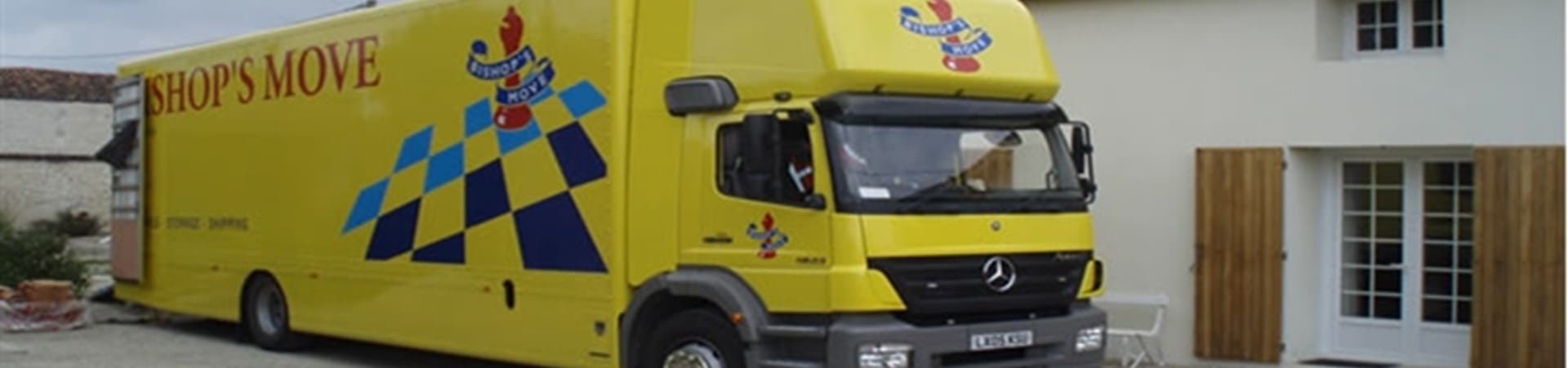
When you’re ready to arrange the move itself, Bishop’s Move provides international removals from France back to the UK. Our removal vehicles travel through Europe on a weekly basis, supporting relocations from Paris, Lyon, Marseille, Nice, Bordeaux, and everywhere in between.
With over 170 years of heritage in the UK, Bishop’s Move is one of the few British removals and storage companies offering comprehensive European relocation services, backed by an experienced team focused on making your transition as smooth as possible.
Want to Find out More?
Your Quick Guide to Returning to the UK from France
British nationals can return to the UK freely, but family members with EU nationalities need to apply for UK family visas before relocating.
Expect moving costs between £400-£5,000+ depending on property size. Budget additional funds for pet relocation.
Allow 3-10 days for the physical move and at least 2-3 months for complete relocation planning, including visa applications (if needed) and property arrangements.
Bishops Move offers comprehensive European removals with 170+ years of experience, weekly France-UK services, and full packing/customs/storage support.
Whether you’re a British national returning home after moving to France, a French citizen relocating for work, or simply moving to the UK for a lifestyle change, there can be a lot to organise. The process involves navigating post-Brexit visa requirements (for non-UK family members), deregistration from French services, customs regulations, and property arrangements, all while managing the logistics of transporting your belongings across the Channel. Bishops Move offers professional assistance in every aspect of your relocation, along with a wealth of helpful international removals services to create a seamless experience.
Moving from France to the UK: Post-Brexit Checklist
If you are planning on moving back to the UK from France, you should be fine to do so, provided all of your family members have British passports. However, following Brexit, family members with EU or other nationalities will need to apply for a family visa before being granted residence in the UK. This is particularly important for French nationals looking to work in the UK, since visa-free visits for EU citizens after Brexit are limited to six months and must not involve any paid work.
Essential Tasks Before Your Move:
Notify and deregister from French services and local authorities (CPAM, Impôts, utilities)
Apply for UK family visas for non-UK family members (allow 2-3 months processing time)
Re-register for essential services in the UK (NHS, council tax, utilities)
Prepare a detailed inventory of your belongings for customs
Arrange the sale of your French property or the termination of your rental agreement
Ensure pets have microchips, rabies vaccinations, and Animal Health Certificates
Close or transfer French bank accounts, arrange final tax declarations
Register children for UK schools and arrange educational records transfer
Arrange temporary UK accommodation if arriving before your main property is available
Sort out pension transfers, currency exchange, and asset management
Obtain UK vehicle insurance if bringing EU-registered vehicles
Visa Requirements for French Nationals and EU Family Members:
British nationals can return to the UK freely without visa requirements. However, if you’re moving with family members who are French nationals or EU citizens, or have never been a British citizen, an appropriate UK visa will be needed:
Family Visa: if accompanying a British citizen spouse/partner
Skilled Worker Visa: subject to an eligible job offer from a UK employer with sponsorship
Student Visa: for studying at a UK university or educational institution
EU Settlement Scheme: for those who were already living in the UK before December 31, 2020
Key Preparation Steps:
Where required, apply for appropriate UK visas through official channels – processing takes 3-12 weeks, depending on the visa type
Deregister from French healthcare (CPAM) and register with the UK NHS upon arrival via your local GP surgery
Arrange UK property purchase/rental and provide proof of address for visa applications
Have health insurance in place until you can register with the NHS.
Prepare customs documentation for importing personal belongings
Submit your final French tax declaration (déclaration de revenus) before leaving
Close or maintain French bank accounts depending on ongoing French financial commitments
Notify French employer if applicable, or arrange employment start date with UK employer
What Does It Cost to Move from France to the UK?
The cost of moving from France to the UK will depend on how much you are transporting, the distance of your move (both in France and the UK), and the level of service you opt for. Based on typical market pricing, basic removals can range from a few hundred pounds for smaller moves to several thousand pounds for larger moves.
Additional cost factors:
Storage requirements in France or the UK during the transition period
Specialist handling for fragile, bulky, or unusual items (pianos, artwork, antiques)
Full packing and unpacking services vs. self-packing
Ferry/Channel crossing charges and fuel costs
Customs paperwork processing
Part-load vs. dedicated vehicle (sharing space can reduce costs by 30-50%)
Insurance level – basic transit cover vs. comprehensive all-risks insurance
Distance within France – Paris/Northern France is typically less expensive than Southern France due to transit time
Destination of your new home – the distance to your destination will impact your costs.
Popular UK Destinations for Arrivals from France
We regularly assist families and professionals relocating from France to key hubs across the UK. Each region offers a distinct lifestyle and economic profile.
London: The primary hub for finance and tech. Popular expat enclaves include Dulwich, Richmond, and Wimbledon for their green spaces and elite schools. Average family home: £500,000+.
Manchester: A media and tech powerhouse with a significantly lower cost of living than the capital. Top picks: Didsbury and Chorlton.
Birmingham: The UK’s “Second City” offers excellent transport links and affordability. Look at Harborne or Moseley. Average family home: £250k–£350k.
Bristol: High quality of life with a focus on creative industries. Clifton and Redland are the most sought-after districts.
Edinburgh: Scotland’s capital offers historic charm, delightful neighbourhoods, and a robust finance sector. Note: The Scottish education system differs from that in England.
Leeds: A Yorkshire economic centre with growing opportunities in legal and digital sectors. Popular areas: Roundhay and Horsforth.
Cost of Living: UK vs. France
Understanding the shift in your purchasing power is vital. Based on 2026 data, the UK is approximately 8–12% more expensive than France overall, though this fluctuates based on your specific region.
Category
UK Trend
France Trend
Groceries
Competitive; high variety
High quality; regional focus
Dining Out
Higher service costs
“Menu du jour” culture
Utilities
Generally higher (privatised)
Regulated; often lower
Property
Higher entry price in hubs
High notary fees; stable prices
The next table gives a useful snapshot of how key expenses compare.
Category
UK (GBP/£)
France (EUR/€ & GBP/£)
Key Note
Housing (2-Bed Rent)
£900 – £3,500
15–25% cheaper outside Paris
The UK is generally more expensive.
Housing (Purchase)
£200k – £800k+
Comparable in Paris; cheaper elsewhere
The UK property market is tighter.
Weekly Groceries
£80 – £120
€70 – €100 (£60 – £85)
The UK is ~15-20% more expensive.
Utilities (3-Bed Usage)
£150 – £250/mo
€120 – €180 (£105 – £157)/mo
France is more affordable.
Water
£30 – £50/mo
€25 – €40 (£22 – £35)/mo
Slightly cheaper in France.
Internet/Mobile
£10 – £40/mo
Similar pricing
Equal
Petrol
£1.40 – £1.60/L
€1.65 – €1.85 (£1.44 – £1.61)/L
The UK is cheaper
Public Transport
£150 – £250/mo
€75 – €85 (£65 – £74)/mo
The UK (London) is much pricier.
Car Insurance
£500 – £1,200/yr
€400 – €800 (£348 – £696)/yr
France is more affordable.
Childcare (Nursery)
£1,000 – £1,800/mo
€400 – €800 (£348 – £696)/mo
The UK is 2-3x more expensive.
Healthcare
Free at the point of use
70% reimbursed (upfront payment required)
The UK is simpler/cheaper for families.
Dining Out
£15 – £30/person
€12 – €25 (£10 – £22)/person
France is slightly cheaper.
Gym Membership
£30 – £60/mo
€25 – €45 (£22 – £39)/mo
France is cheaper.
Working in the UK
The transition from a French bureau to a UK office involves shifts in both legal status and daily etiquette.
Visa Requirements (Post-Brexit)
No restrictions on working after returning.
French/EU Nationals: Typically require a Skilled Worker Visa, necessitating a job offer from a licensed UK sponsor.
Workplace Culture: Key Differences
Hours & Breaks: UK hours are often 9:00–17:00. The long French déjeuner is replaced by a shorter 30–60 minute lunch.
Communication: UK style is more indirect and polite; French style is often more direct and hierarchical.
Leave: Expect less annual leave (25–28 days) compared to the 30+ days common in France.
Pensions: Auto-enrollment is mandatory. Employers contribute a minimum of 3%, while employees contribute 5%.
The NHS: Navigating UK Healthcare
The National Health Service (NHS) is free at the point of use, representing a major shift from the French “pay-and-reimburse” (CPAM) model.
How to Register:
1. Find a local GP (General Practitioner) at nhs.uk.
2. Provide proof of address (utility bill) and ID (passport).
3. The “Gateway” System: You must see your GP for a referral before seeing any specialist—unlike in France, where direct access is common.
Key Difference: There is no “Carte Vitale” or reimbursement paperwork. Aside from fixed prescription charges in England (£9.90 per item), the service is funded entirely via your taxes.
The UK Education System
Education is compulsory from ages 5 to 18, though children typically start school before their fifth birthday. If your children are transitioning from the French system, note these core differences:
School Structure & Curriculum
Primary (Ages 5–11): Often less formal and more play-based than the French école primaire.
Secondary (Ages 11–16): Ends with GCSE exams.
Sixth Form (Ages 16–18): Students specialise in just 3–4 A-Level subjects (much narrower than the Baccalauréat).
State vs. Private
State Schools: Free and funded by the government. Selection is often based on your “catchment area” (proximity).
Private Schools: Fees range from £15k to £45k per year.
International Baccalaureate (IB): Many UK schools offer the IB, providing a smoother transition for students coming from international schools in France.
Banking & Finance
Building a financial footprint in the UK from scratch can be a challenge due to the Credit Score system.
Setting Up Your Accounts
Challenger Banks: (Monzo, Starling, Revolut) are usually the easiest to open immediately upon arrival.
High Street Banks: (HSBC, Barclays, Lloyds) may require more extensive “Proof of Address” history.
Tax & Currency
The Tax Year: Runs from April 6th to April 5th (unlike the calendar year in France).
Income Tax: The first £12,570 is tax-free (Personal Allowance).
Credit Building: Register on the Electoral Roll as soon as you have a permanent address; this is the fastest way to boost your UK credit score for future mortgages or loans.
Moving back to the UK from France with Bishop’s Move
Bishops Move has a dedicated European removals team to ensure that, wherever you’re moving from in France, we are there to help. With so many moving parts to an international relocation – from deregistering from French services to re-registering with UK authorities, managing property arrangements, and coordinating visa applications for non-UK family members – you must be allowed the time to focus on settling yourself and your family back into your UK home. Our breadth of services is perfectly designed to curate a comprehensive and seamless removal from France to the UK.
Our English-speaking representative will chat through our range of European removals services, from packing and wrapping, transportation, storage, and removals insurance. Our moving survey is free of cost and provides you with an accurate quote that is tailored to your unique relocation requirements.
Our European removal teams have excellent knowledge in removals from France to the UK, so whether you are relocating your entire household contents or just a few items, we can help. Plus, we can easily advise on any paperwork or restrictions that may present themselves.
Our Relocation Process: What to Expect
Step 1: Free Moving Survey & Quote
Our English-speaking representative conducts a comprehensive survey of your belongings in France, either virtually or in person. We’ll discuss your specific requirements, timeline, and any special considerations (fragile items, vehicles, pets). You’ll receive a detailed, no-obligation quote tailored to your exact needs.
Step 2: Planning & Documentation
We’ll guide you through the necessary customs paperwork. Our team will help you prepare an inventory of items, understand UK import procedures, and coordinate timing with your French property arrangements and UK visa applications (if needed for family members).
Step 3: Professional Packing
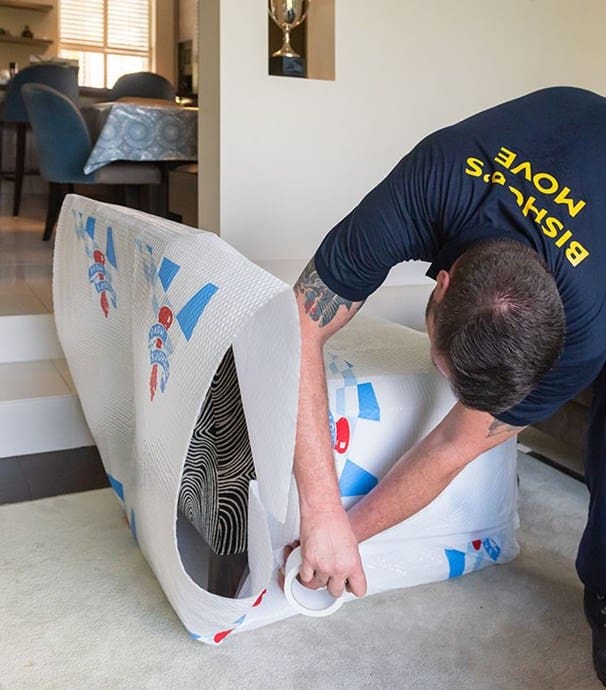
Depending on the level of service you choose, our expert packing team can arrive at your French property with all the necessary materials. We can carefully wrap and protect your belongings, with specialist handling for fragile items, artwork, antiques, and valuable possessions. All boxes are clearly labelled and inventoried for customs clearance.
Step 4: Transportation & Customs Clearance
Your belongings are loaded onto our removal vehicles, which travel from France to the UK weekly via Channel crossing or ferry. We handle all customs clearance procedures on both the French and UK sides, ensuring your items move smoothly through the border. Transit time is typically 3-10 days, depending on your location in France and the UK.
Step 5: Delivery & Unpacking
We deliver your belongings to your UK property, placing furniture and boxes in the rooms you specify. If you’ve opted for our unpacking service, we’ll unpack your items, remove packing materials, and help you settle into your UK home more quickly.
Why Choose Bishop’s Move for Your Move from France to the UK?
170+ years of removals and storage heritage with deep expertise in France-UK relocations
Weekly removal services to and from France ensure flexible scheduling and competitive pricing
English-speaking representatives who guide you through every step of the return process
Comprehensive services including packing, wrapping, transportation, storage, and removals insurance
Free moving survey providing accurate, tailored quotes with no hidden costs
Specialist pet transportation services for cats, dogs, ferrets, and other animals returning to the UK
Full-service or part-load options to suit every budget and timeline
Moving from France to the UK FAQs
Can British nationals return to the UK from France after Brexit?
Yes, British nationals have the unconditional right to return to and live in the UK at any time. Brexit has not changed this right for UK citizens. However, if you’re moving with family members who are French nationals or EU citizens, they will need to apply for appropriate UK visas before relocating. The most common option is the UK Family Visa if they’re joining a British citizen spouse or partner. Processing times typically take 3-12 weeks, so plan to apply well in advance of your intended move date. British nationals do not need to notify UK authorities in advance of returning, but should re-register with the NHS, council tax, and other services upon arrival.
How long does it take to move from France to the UK?
The physical transportation of your belongings typically takes 3-10 days from collection at your French property to delivery in the UK, depending on your specific locations. However, the complete relocation process – including deregistration from French services, visa applications for family members (if needed), property arrangements, and scheduling – generally requires 2-3 months of planning. Bishop’s Move operates weekly services from France to the UK, providing flexibility in scheduling. If you opt for a part-load service (sharing vehicle space), transit may take slightly longer but offers significant cost savings.
Can I bring my pets when moving from France to the UK?
Yes, you can bring cats, dogs, and ferrets with you from France to the UK, but they need to meet the UK’s pet import requirements. Following Brexit, UK pet passports are no longer valid for entry from the EU.
To bring a pet from France to the UK, they will need:
A microchip (ISO 11784/11785 compliant)
A valid rabies vaccination administered a minimum of 21 days before travel
An Animal Health Certificate (AHC) issued by an official veterinarian within 10 days of travel.
Tapeworm treatment for dogs, administered 1-5 days before travel and recorded on the AHC.
Additional considerations:
Pets must enter the UK via an approved transport company and route (Eurotunnel or ferry).
Each AHC costs approximately £100-£200 per pet and can take time to arrange
Quarantine typically isn’t required if all requirements are met and all rules are followed.
Assistance dogs can travel on more routes and may have additional exemptions.
Other pets like birds and reptiles can be brought to the UK, but the rules are stricter, and additional paperwork is required. Bishop’s Move offers specialist pet transportation services to handle all aspects of your pet’s relocation.
What should I do about my French driving license?
If you move to the UK from France, you can drive on your French driving license for up to 12 months. Before the end of this 12-month period, you must exchange your French license for a UK one. The exchange process is straightforward but requires various documents, including proof of residence, a passport, a French driving license, and sometimes additional paperwork. Processing times can take 3-8 weeks, so it’s advisable to start the exchange process well before your 12-month period expires. You can exchange your license through the DVLA’s online service or by post. If you don’t exchange within 12 months, you’ll need to take the UK driving tests to obtain a license.
How do I deregister from French services?
Deregistering from French services is essential to avoid continued obligations and charges. Key services to deregister from include: (1) CPAM (French healthcare) – notify your local CPAM office of your departure, (2) French tax authorities (Impôts) – submit a final tax declaration for the year you leave France, (3) Utilities – cancel electricity, gas, water, internet contracts or arrange transfer to new occupants, (4) Bank accounts – close or maintain depending on ongoing French financial commitments. Keep documentation of all deregistration confirmations, as they may be required for UK registration or future French administrative matters.
Will I experience reverse culture shock?
Yes, reverse culture shock is common when returning to the UK after living in France. Even though you’re returning to a familiar culture, you may find that both you and the UK have changed during your time abroad. Common experiences include: feeling that the UK has changed while you were away, missing aspects of French life (food culture, work-life balance, social customs), finding UK social interactions feel rushed or impersonal, struggling to relate to friends and family who haven’t had your expat experience, and feeling unsettled by changes in UK politics, culture, or daily life. To ease the transition: give yourself time to readjust (typically 6-12 months), maintain connections with France through language, food, and friendships, seek out others who’ve had similar experiences, be patient with yourself and loved ones, and consider that you’re creating a ‘new normal’ rather than returning to your old life.
What items are prohibited when moving from France to the UK?
The UK has specific restrictions on what can be imported from France, particularly post-Brexit. Prohibited items include: firearms and ammunition (without UK authorisation), illegal drugs and certain controlled medications, counterfeit goods, and endangered species products. Restricted items requiring special documentation include: certain plants and plant products (subject to phytosanitary controls), foods of animal origin (meat, dairy, eggs – limited to 2kg total per person for personal consumption), alcohol and tobacco above personal allowance limits, and pets (requiring health certificates as detailed above). For household goods, most personal items are permitted when moving residence. Prescription medications should be in original packaging with prescriptions, limited to a 3-month supply. Bishop’s Move’s team can advise on specific items in your inventory and help ensure compliance with UK customs regulations. When in doubt, contact the UK Border Force before your move.
Want to Find Out More?
Do you require assistance or advice about moving from France back to the UK? Get in touch with Bishop’s Move’s European department today. With 170+ years of experience, weekly France-UK services, and comprehensive support from initial survey to final delivery, we’ll ensure your return to the UK is smooth, stress-free, and successful.
MOVING TO THE UK
We offer our full range of removal services to customers looking to move to the UK, including packing, removals insurance, and transportation.
Whether you are moving to Australia or Zimbabwe, Bishop’s Move’s International shipping services can help. We also operate European relocation services on a weekly basis – so wherever in the world you are moving to or from, we can make your journey home a success.