From office removals to complex commercial relocation projects, Bishop’s Move manages business relocations across the UK, delivering every move on time, within budget and with minimal disruption.
Moving home can be one of the most stressful times in your life, especially if you’re moving as far as Thailand. Our years of experience and local knowledge prove to be invaluable as you prepare for a new life, culture and language in Thailand.
No matter where you are planning on moving to in the Land of Smiles, whether it is Bangkok, Pattaya or Phuket City, we can help to answer those important questions that come with an international move.
Moving to Thailand?
Why Move to Thailand?
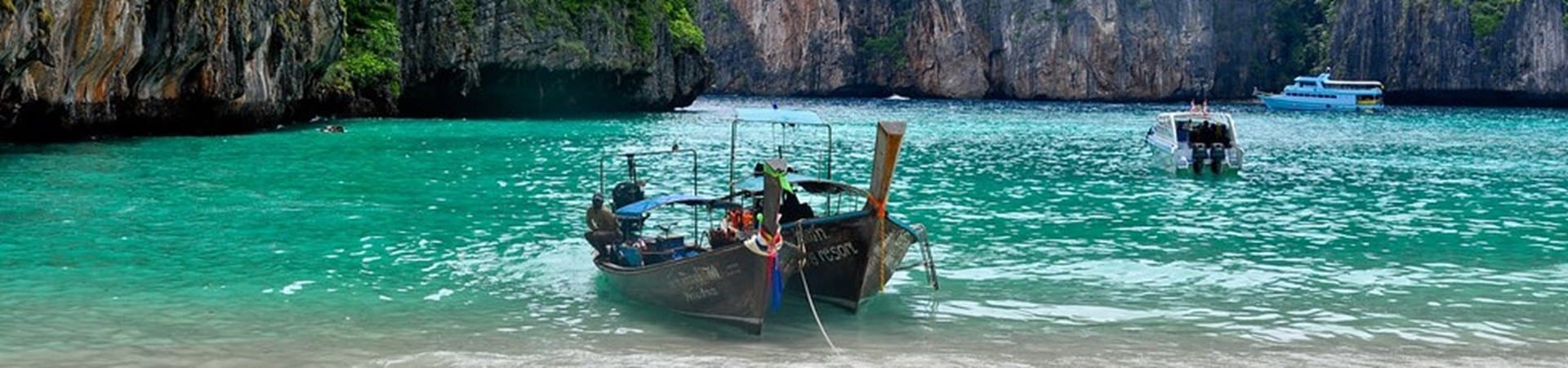
Beautiful beaches, rich culture, friendly people and an affordable cost of living are a few reasons many are choosing to move to Thailand from the UK. While life in Thailand is often portrayed as laid back, the reality offers far more variety. Its cities are modern and booming, while its beach towns are vibrant and full of character. Thailand really offers the best of both worlds when it comes to life in the sun.
The Kingdom of Thailand, formerly known as Siam, is made up of 76 provinces and is home to more than 68 million people. With its tropical climate and famously welcoming culture, it’s easy to see why so many people relocate here. Thailand’s location in Southeast Asia, bordering the Andaman Sea, Myanmar, Laos and Cambodia, gives it a unique blend of landscape, traditions and opportunities. The country uses the Baht, and is predominantly Buddhist, contributing to the peaceful community-focused lifestyle that attracts so many newcomers.
How Can I Move to Thailand from the UK?
Moving to Thailand from the UK involves securing the right visa, gathering the required documentation, and understanding the legal responsibilities that come with living in the country. While this process is straightforward once you know the steps, it is important to begin your preparations early and ensure all paperwork is completed before the relevant deadlines.
Visas and Documentation
To live and work in Thailand, you need a job offer from a registered business, a work permit and a non-immigrant B visa. This process is to be started before entering the country. The easiest way to get the work permit is through your employer; however, there is still documentation that you will need to supply. The working visa only applies to the permitted job for which it was granted. If you change jobs, a new visa is required.
There are also visa options available for those looking to work in cutting-edge science and technology positions, spouse and dependents visas, visas for remote workers, wealthy pensioners, and more.
Ongoing Legal Requirements
As a foreigner, you will typically need to check in with the Thai Immigration Department every 90 days. After the first 90 days on your non-immigrant visa, you will be able to apply for a one-year extension and re-entry permit, which allows you to come and go. After spending three years in Thailand, you will be able to apply for permanent residence.
Culture in Thailand
There are many new aspects of life here in Thailand that could cause culture shock for those moving from the UK, from dress code to food, language to weather. English is fairly widely spoken in the larger cities, you’ll be glad to know, as it is taught in schools; however, learning a few phrases in Thai can go a long way with the local people. Thai is a difficult language to master, with 5 tones to differentiate meaning, so you’ll want to practice plenty before putting it to use!
Buddhism is the most subscribed religion in Thailand, so it’s always good to brush up on what may be found disrespectful. For example, greeting someone holds great importance in Thai culture. The wai is a traditional greeting, with palms placed together like a prayer between the chest and forehead, combined with a small bow.
While tourists in Thailand tend not to follow this rule, modest dressing is also an important part of Thai culture. Professional and appropriate attire is common, with covered chests and shoulders for women, both out and about and in the workplace. Of course, in typical beach towns, swimming attire and bikinis are expected at the beach, but more modest clothes are best for strolls into town.
Healthcare
UK residents will find the healthcare system in Thailand somewhat familiar. If expats hold a job in Thailand, then they will automatically be paying 5% of their salaries into the social security scheme of the nation, covering public health insurance. Expats will be enrolled and assigned to a hospital near their residence where they can receive free treatment should they require it. Note that if you go to another hospital, you will have to pay for your medical care out of pocket.
Hospitals are typically of good quality, with highly skilled doctors and state-of-the-art equipment. Like other public systems, hospitals can become quite busy, and waiting times may vary. Private healthcare is a way to avoid the queues, but it could cost you considerably.
Working in Thailand
For those looking to move to Thailand, finding job opportunities will be of primary concern. There is a huge mixture of people who have moved, from retirees to students, and therefore a huge range of ways to get into a career, so far from home. A great way to find a job is to find a UK role that will offer an internal company transfer.
If hoping to find a local role, it’s a good idea to secure the job before making the move to ensure you won’t be left stranded while job searching in a foreign market. For young professionals or students looking for initial work, finding a role teaching English is a great way to enter the job market in a fun environment. If you’ve got bigger aspirations, starting a company in Thailand is also a popular way to make a living.
Living in Thailand
If you’re moving across the world, it can be a comfort to have a community of like-minded people around you. This is why we’ve compiled a few of the most popular destinations for expats.
Bangkok
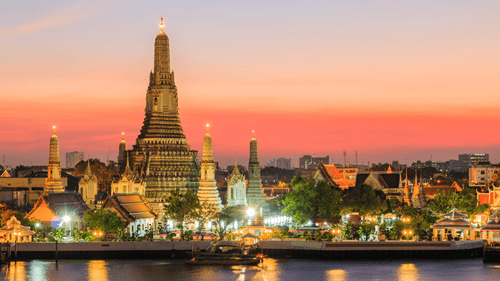
Thailand’s capital is a cosmopolitan city with a vibrant atmosphere. From the bustling streets to the serene temples, Bangkok is a city many want to visit and move to. The city itself has a growing expat community, with businesses and companies based here. For families, there are many international schools to choose from.
Phuket
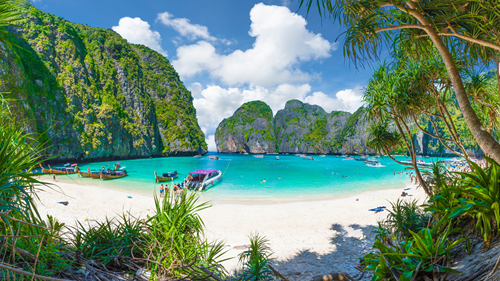
If beach life is what you are after when moving to Thailand, then Phuket is an attractive option. As Thailand’s largest island, Phuket offers a sense of paradise. The island is full of rich biodiversity and white beaches, as well as luxury hotels. The main city, also called Phuket, is bustling with nightlife and atmosphere.
Chiang Mai
Surrounded by hills and rural towns, the city can feel like it’s in the middle of nowhere. Yet, it is Thailand’s second-largest city. Reasonably priced compared to Bangkok and Phuket, Chiang Mai has a growing population of expats who come for its friendly and welcoming communities. With low crime rates and fantastic facilities, many expats are choosing Chiang Mai to move to.
Moving to Thailand with Bishop’s Move
If you are looking for removal services to Thailand, then simply get in touch with our international removals team today. With 170+ years of experience, Bishop’s Move has moved people to every corner of the world. Our professional teams take care of every aspect of the move so that everything runs as smoothly as possible. With every moving package being completely customisable and bespoke, you will receive exactly the service you want.
Moving to Thailand FAQs
How long can UK citizens stay in Thailand without a visa?
UK passport holders can visit Thailand for a maximum of 60 days without applying for a visa. This form of entry cannot be used for those who are relocating or working in the country.
Can UK citizens buy property in Thailand?
There are strict rules around non-citizens purchasing property in Thailand; for example, you can buy an apartment, but only if less than 40% of the total unit owners are foreigners. As a non-citizen, you are also not permitted to purchase land, which means if you were to purchase a property, you would have to enter a leasehold agreement.
Is Thailand safe for expats?
Yes, Thailand is generally safe for expats. While violent crimes are uncommon, expats should be aware of petty crimes such as pickpocketing and scams, particularly in tourist areas.
How do I open a bank account in Thailand as an expat?
Once you have arrived in Thailand, you’ll need to visit a branch in order to open a bank account. You will need to take your passport, work permit, proof of address and visa documentation.
Can I drive in Thailand as a UK citizen?
Yes, UK citizens with a full driving licence will be able to drive in Thailand; however, you will need to obtain an International Driving Permit (1968). This is required by law alongside your UK driving licence. This permit lasts for three years (unless your driving licence expires before this date).