From office removals to complex commercial relocation projects, Bishop’s Move manages business relocations across the UK, delivering every move on time, within budget and with minimal disruption.
Are you planning a move to Germany? Whether you are moving to Frankfurt, Hamburg, Düsseldorf, Munich, Berlin, or a little village in Saxony, here’s everything you need to know about moving to Deutschland.
Moving abroad can be a daunting task, which is why it’s important to understand everything about the country you’re going to live in beforehand.
As one of the largest removal companies in the UK, we have the expertise and local knowledge to advise on the social, economic, and environmental factors that could influence your decision to move to Germany from the UK. Read on to discover what moving to Germany entails and the requirements you will need to be aware of ahead of your move.
Moving to Germany?
Moving to Germany from the UK represents an exciting opportunity to experience one of Europe’s most dynamic economies and rich cultural landscapes. Whether you’re relocating for work, study, retirement, or simply seeking a new adventure, Germany offers an excellent quality of life, efficient public services, and a welcoming international community. This comprehensive guide covers everything you need to know about your move to Germany, from visa requirements and costs to finding accommodation and settling into German life.
Quick Guide to Moving to Germany
Post-Brexit, UK citizens need a visa for stays longer than 90 days – apply for your German residence permit before arrival or within 90 days of entry.
Germany’s cost of living is generally 6% lower than the UK, with significant savings on rent outside major cities like Munich and Frankfurt.
Public health insurance (Gesetzliche Krankenversicherung) is mandatory for most employees and covers comprehensive healthcare.
Brexit and Visa Requirements for Moving to Germany
Since Brexit, UK citizens are no longer EU citizens and require proper visas for long-term residence in Germany. Understanding these requirements is crucial for a smooth relocation.
Visa-Free Short Stays
UK passport holders can visit Germany visa-free for up to 90 days within any 180-day period for tourism or business purposes, such as attending meetings and conferences. This grace period is ideal for exploration trips to find accommodation or attend job interviews before your formal move.
Common Long-Term Visa Types
Employment Visa: Required for UK citizens with a job offer in Germany. Valid for up to one year, after which you can apply for a residence permit.
German Opportunity Card: Aimed at non-EU nationals seeking employment in Germany. You must hold an academic degree or professional qualification. If approved, you will be granted up to 12 months in Germany to find a suitable role.
EU Blue Card: For highly qualified workers with a university degree and a job offer (minimum salary requirements apply). Provides an accelerated path to permanent residence.
Family Reunion Visa: For spouses and dependent children of German residents or citizens.
Self-Employment Visa: For freelancers and entrepreneurs who can demonstrate proof of financial means. Other requirements apply depending on the category you’re eligible for.
Student Visa: For UK students enrolled in German universities, typically requiring proof of funds and an acceptance letter from a recognised institution.
The Application Process
You can apply for your residence permit before arriving in Germany through the German Embassy in London, or within 90 days after entering Germany at your local Ausländerbehörde (Foreigners’ Registration Office). Most experts recommend applying before arrival to avoid timing pressures. Processing times range from 6 to 12 weeks, though some visa types can take up to 6 months, so plan accordingly.
Essential Documentation
Required documentation varies between visa types. You can typically expect to be asked for:
Valid UK passport
Completed application forms (varies by visa type)
Passport-sized biometric photographs
Proof of health insurance coverage
Employment contract or admission letter (depending on visa type)
Proof of financial means (bank statements showing sufficient funds)
Proof of accommodation in Germany
Qualification certificates (officially translated if necessary)
Why Choose Bishop’s Move for Your Germany Relocation?
With over 170 years of moving experience, Bishop’s Move has helped thousands of families and businesses relocate to Germany successfully. Our dedicated International & European department understands the unique challenges of post-Brexit moves and provides comprehensive support throughout your journey.
Comprehensive door-to-door removals service from any UK location to your German destination
Expert guidance on customs documentation and Brexit-related requirements
Overall, Germany’s cost of living is approximately 6% lower than the UK, though this varies significantly by city and region:
Rent: 25-40% cheaper than UK equivalents, except in Munich and Frankfurt, which are comparable to London prices. Berlin, Leipzig, and Dresden offer excellent value.
Groceries: Discount supermarkets like Aldi, Lidl, and Netto offer significant savings; however, grocery prices are typically around 3% lower in the UK than in Germany
Utilities: Gas and electricity costs are roughly similar to the UK, though more stable due to long-term fixed contracts
Public Transport: Excellent value with monthly passes ranging from €50-70 depending on the city; annual passes are often available at 10 months’ cost
Healthcare: Statutory health insurance (around 15% of gross salary) is more expensive than the UK’s free NHS, but private insurance is available for higher earners
Dining Out: approximately 15% cheaper than the UK for restaurant meals; beer is significantly cheaper (€3-4 for 0.5L)
Childcare: Kindergarten costs vary by state, with some offering free provision; fees are generally more affordable than UK nursery fees
Why Move to Germany?
Germany consistently ranks among the world’s best places to live, offering a compelling combination of economic opportunity, quality of life, and cultural richness that attracts over 1 million foreign residents annually.
Strong Economy & Employment: Europe’s largest economy offers excellent career opportunities across diverse sectors, including automotive, engineering, technology, pharmaceuticals, and renewable energy. Unemployment remains consistently low at around 3-4%.
Work-Life Balance: German labour laws mandate 20-30 days paid annual leave, strict working-hour limits, and comprehensive parental leave provisions. The cultural emphasis on ‘Feierabend’ (end of work day) means clearer boundaries between work and personal time.
Excellent Public Services: Efficient public transport, well-maintained infrastructure, and comprehensive waste management and recycling systems. Cities are clean, safe, and pedestrian-friendly.
Education System: Free university education even for international students (small administrative fees only), and high-quality public schools. Germany’s dual education system (apprenticeships and academic) is world-renowned.
Healthcare Quality: Germany’s healthcare system ranks among the best globally, with universal coverage, short waiting times, and freedom to choose your doctor and hospital.
Central European Location: Germany is the perfect base for exploring Europe, with excellent rail and air connections to neighbouring countries. Weekend trips to Paris, Prague, Vienna, or Amsterdam are easily manageable.
Environmental Leadership: Germany leads Europe in renewable energy, green technology, and environmental protection, offering a high quality of natural environment and sustainable living options.
German Culture and Lifestyle
Understanding German cultural norms and lifestyle helps you integrate more quickly and avoid common cultural misunderstandings.
Key Cultural Characteristics
Punctuality (Pünktlichkeit): Germans take punctuality very seriously in both professional and social contexts. Arriving 5-10 minutes early is considered appropriate; late arrival without notice is viewed as disrespectful.
Direct Communication: German communication style is more direct than British culture. Feedback is typically straightforward and shouldn’t be interpreted as rude – it’s simply efficient and honest.
Rules and Regulations (Ordnung): German society functions on clear rules and structures. From quiet hours (22:00-07:00 on weekdays, all day Sunday) to recycling requirements, following established guidelines is expected.
Privacy and Formality: Germans generally maintain more formal relationships initially, using ‘Sie’ (formal you) until invited to use ‘du’ (informal you). Personal questions about salary, relationships, or age are considered intrusive.
Cash Culture: Despite being a highly developed economy, cash remains king in Germany. Many restaurants, shops, and services don’t accept cards, so always carry cash.
Sunday Traditions
Sundays in Germany are sacred rest days. Almost all shops are closed (except bakeries until 13:00, gas stations, and some tourist areas). Loud activities like mowing lawns, drilling, or playing loud music are prohibited. Germans use Sundays for family time, forest walks, and café visits. Plan your grocery shopping for Saturday to avoid getting caught out!
Social Integration and Making Friends
Germans can initially seem reserved, but friendships, once formed, tend to be deep and loyal. Here are effective ways to build your social network:
Join a Verein (club): Germans love their clubs – sports clubs, hiking groups, choir, book clubs. There are over 600,000 registered clubs in Germany.
Language courses: Integration courses (Integrationskurs) are excellent for both learning German and meeting other expats and migrants.
Work connections: German colleagues often socialise after work, and work cultures typically include team-building activities.
Expat groups: Cities have active international communities with meetup groups, Facebook communities, and networking events.
Volkshochschule (VHS): Adult education centres offering affordable courses in everything from cooking to pottery, excellent for meeting locals with shared interests.
Working in Germany
Germany’s robust economy offers excellent employment opportunities across numerous sectors, with particularly strong demand for skilled workers in technology, engineering, healthcare, and skilled trades.
English-language opportunities: Increasing in Berlin, Munich, Frankfurt, and Hamburg, particularly in tech startups, international corporations, and academic institutions
Salary expectations: Median gross annual salary around €45,000-€51,000; experienced professionals in high-demand fields can earn €60,000-€90,000+
German language: While some roles (especially tech) accept English-only, German proficiency significantly expands opportunities and is essential for customer-facing roles, healthcare, and most traditional sectors
Comprehensive health insurance, pension contributions, and unemployment insurance are included in employment
Strong worker protections and employment law (Kündigungsschutz – protection from dismissal)
Generous parental leave: up to 14 months paid parental leave (Elternzeit) for each parent
Maximum 48-hour working week (averaged over 6 months), with strict limitations on overtime
Qualification Recognition
UK qualifications are generally well-recognised in Germany, though some regulated professions (doctors, nurses, teachers, lawyers) require formal recognition through the Central Office for Foreign Education (ZAB). The process typically takes 1-3 months and may require supplementary courses or examinations.
Healthcare in Germany
Germany operates a universal multi-payer healthcare system that combines statutory health insurance (Gesetzliche Krankenversicherung – GKV) and private health insurance (Private Krankenversicherung – PKV). The system is highly regarded for quality care and short waiting times.
Public Health Insurance (GKV)
Mandatory for employees earning under €73,800 annually (2025 threshold)
Cost: approximately 14.6% of gross salary (split between employer and employee) plus additional contributions of around 1-2%
Family coverage: Non-working spouses and children are covered at no extra cost
Comprehensive coverage: includes GP visits, specialist care, hospital treatment, prescription medication (small co-pays), dental care, and preventive care
Major providers: TK (Techniker Krankenkasse), AOK, Barmer, DAK-Gesundheit – coverage is largely standardised with minor service differences
Private Health Insurance (PKV)
Mandatory for employees earning under €73,800 annually (2025 threshold)
Cost: approximately 14.6% of gross salary (split between employer and employee) plus additional contributions of around 1-2%
Family coverage: Non-working spouses and children are covered at no extra cost
Comprehensive coverage: includes GP visits, specialist care, hospital treatment, prescription medication (small co-pays), dental care, and preventive care
Major providers: TK (Techniker Krankenkasse), AOK, Barmer, DAK-Gesundheit – coverage is largely standardised with minor service differences
Registering for Healthcare
When you start employment in Germany, your employer will ask you to choose a health insurance provider and register you with the relevant scheme. If you’re self-employed or a job seeker, you must arrange insurance independently.
What are the Best Places to Live in Germany?
Germany is a vast country, running from the Baltic Sea in the north to the snowy Alps in the south, covering some 357,000 square kilometres. This can make narrowing down a place to live difficult. Your final decision will widely rely on your requirements and understanding of each area’s offerings in terms of culture, way of life and cost of living. To get you started, here are some popular locations for expats to live in Germany:
Munich – Munich is the capital of Germany’s largest state, Bavaria. This southern city is often seen as the pinnacle of German culture, bursting with life, history, and rich culture. Neighbourhoods in Munich are diverse, combining the traditional with the modern. This can make finding a home much easier, regardless of your taste.
Frankfurt – If you’re looking for an affluent living environment, Frankfurt is a great option for you. In the heart of the country’s financial sector, Frankfurt attracts busy business professionals.
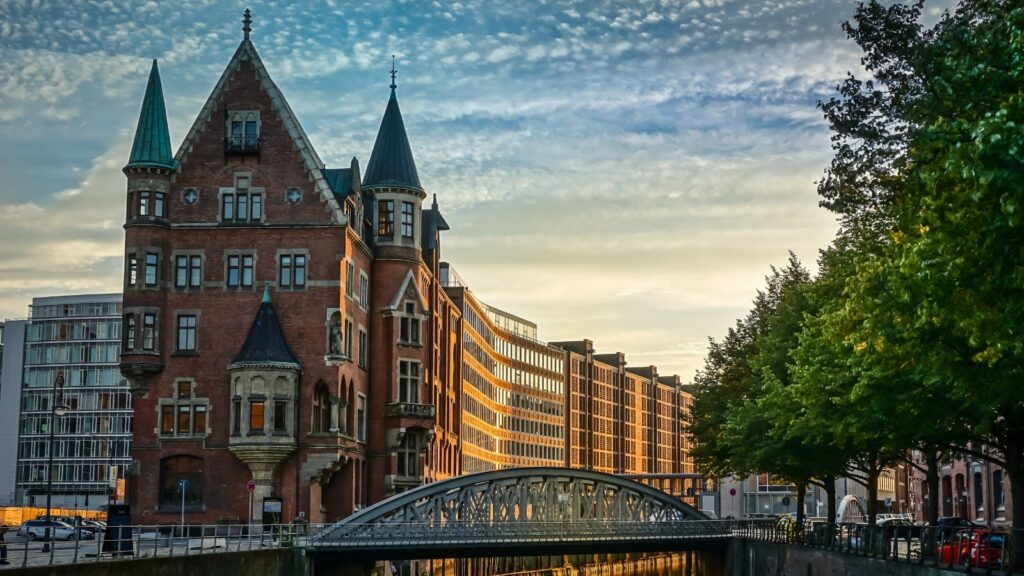
Hamburg – Situated in the north of Germany, Hamburg is the country’s second-largest city. Hamburg has a number of beautiful parks, waterways, lakes, and nature reserves, creating the balance between urban and rural that many desire.
Berlin – The capital of Germany, Berlin, is a modern powerhouse of Europe and has as much to offer as other capitals such as London, Rome, and Paris. Berlin is a city of innovation, yet it has retained its classic bohemian identity.
Finding Accommodation in Germany
Germany’s rental market can be competitive, particularly in major cities like Berlin, Munich, Hamburg, and Frankfurt. Understanding the rental process and having proper documentation prepared significantly improves your chances of securing accommodation.
Key Rental Market Insights
Rental costs: €6-€20/m² in smaller cities, €15-€25/m² in major cities, €18-€30/m² in Munich and Frankfurt city centres
Unfurnished means REALLY unfurnished: German ‘unfurnished’ apartments often lack kitchen fittings, light fixtures, and sometimes even flooring
Deposit: typically 2-3 months’ cold rent (Kaltmiete – rent without utilities), held in a separate account
Competition: Popular cities see 50+ applicants per property; be prepared to attend viewings promptly and provide complete documentation immediately
Rental period: Long-term contracts are standard; short-term furnished rentals are available but more expensive
Essential Documents for Rental Applications
SCHUFA credit check: German credit report, essential for most rentals
Proof of income: Last 3 months’ pay slips or employment contract
Previous landlord reference: If available from a UK landlord
Photo ID: Passport
A guarantor will typically be required if you cannot provide proof of income and credit history.
WG-Gesucht.de: Excellent for shared apartments (WG – Wohngemeinschaft) and short-term rentals
Facebook groups: Active expat and rental groups in major cities
Temporary Accommodation
Consider booking temporary accommodation (serviced apartment or extended hotel stay) for your first 2-4 weeks to allow time for viewings and applications. This approach removes pressure and allows you to assess neighbourhoods in person before committing to a long-term contract.
Education and Schools in Germany
Germany offers high-quality, free education through its public school system, alongside international and private school options for families preferring English-language or alternative curricula.
German Public School System
German education follows a tiered system that separates students after primary school (Grundschule, ages 6-10) into three tracks:
Gymnasium: Academic track leading to Abitur (university entrance qualification), ages 10-18
Realschule: Intermediate track for technical and commercial careers, ages 10-16
Gesamtschule: Comprehensive schools combining all three tracks under one roof
Public schools are free and generally of good quality, though the tiered system can be challenging for students new to Germany. Most schools offer German as a Second Language support classes for non-native speakers.
International Schools
International schools follow British, American, or International Baccalaureate (IB) curricula and teach primarily in English. Major cities have multiple options:
Costs: €8,000-€25,000 annually, depending on school and age
Benefits: Easier transition for children, English-language instruction, internationally recognised qualifications
Waiting lists: Popular schools may have 6-12-month waiting lists; apply early
Major cities: Berlin, Munich, Frankfurt, Hamburg, and Düsseldorf, have the most international school options
Childcare and Kindergarten
Kindergarten (ages 3-6) is increasingly free or heavily subsidised in most German states, though availability can be limited. Apply immediately after moving to secure a spot. Daycare for children under 3 (Krippe) is available but often has waiting lists and may require fees (€100-€500 monthly, depending on location and household income).
Learning German: Your Path to Integration
While it’s possible to live in Germany with limited German (especially in international workplaces), learning the language dramatically improves your quality of life, employment opportunities, and social integration. Here’s a realistic roadmap for language acquisition.
Integration Courses (Integrationskurs)
Government-subsidised courses for new residents: 600-900 hours of German language instruction plus 100 hours on German culture, history, and law
Cost: €2.20 per lesson hour (total around €1,980), or free if receiving unemployment benefits
Goal: Achieve B1 level German (intermediate) within 6-9 months of part-time study
Find courses: Search at bamf.de or through your local Volkshochschule (VHS)
Language Level Timeline
Here’s what to expect at each Common European Framework (CEFR) level:
A1 (Basic): 80-100 hours study – survival German for shopping, basic greetings, simple questions
A2 (Elementary): 180-200 hours total – handle routine tasks, simple conversations about familiar topics
B1 (Intermediate): 350-400 hours total – sufficient for daily life, work in simple contexts, understand main points of conversations. Many jobs require this level as a minimum.
B2 (Upper-Intermediate): 600-650 hours total – participate in detailed discussions, express opinions, understand complex texts. Often required for professional roles.
Start before you move: Use Duolingo, Babbel, or Busuu for foundational vocabulary.
Consume German media: Watch German TV with German subtitles (Netflix has an excellent selection), listen to Deutsche Welle’s ‘Langsam Gesprochene Nachrichten’ (Slowly Spoken News).
Language exchange partners: Find conversation partners through tandem.net or local Stammtisch groups.
Daily practice: Even 15-20 minutes daily is more effective than 2-hour weekly sessions.
Embrace mistakes: Germans generally appreciate efforts to speak German and are patient with learners.
Practical Moving Logistics
Successfully relocating to Germany requires careful planning and understanding of the practical steps involved in your international move.
Timeline for Your Move
Most successful relocations follow a 3-6 month planning timeline:
3-6 months before: Secure employment/visa, research accommodation areas, obtain quotes from removal companies
2-3 months before: Book removal company, arrange temporary accommodation, start German language learning, begin decluttering and planning what to take
1 month before: Begin packing, notify UK utility providers and council, arrange pet transportation if applicable, inform HMRC of your move, transfer or close bank accounts as needed
1-2 weeks before: Final packing, collect important documents (medical records, educational certificates, birth certificates), prepare essential items for hand luggage
Customs and Import Regulations
Post-Brexit, moving personal belongings from the UK to Germany requires customs clearance:
Tax-free import: Personal household goods and used items can be imported duty-free if you’ve owned them for at least 6 months and are transferring your residence to Germany
Required documentation: Detailed inventory list, proof of residence transfer, copy of passport/visa
Restricted items: Firearms, endangered species products, certain foods (meat/dairy products particularly restricted)
Vehicle import: UK vehicles can be imported but require re-registration, adaptation to German standards (headlights), and payment of applicable taxes if purchased less than 6 months before import
Bishop’s Move handles all customs documentation and clearance as part of our comprehensive service, ensuring your belongings clear customs efficiently.
What to Ship vs. What to Buy New
Consider these factors when deciding what to bring:
Bring: Sentimental items, quality furniture, books, clothes, kitchen items (if compatible with German electrical standards), and children’s items.
Consider buying new: Large appliances (different electrical standards and measurements), garden furniture (often cheaper in Germany), heavy/bulky low-value items.
Electrical compatibility: The UK uses 240V (as does Germany), but plugs differ. Small appliances work with simple adapters; large appliances may need permanent rewiring.
Furniture sizing: German apartments often have different dimensions; UK furniture may not fit German spaces optimally.
Our experienced team at Bishop’s Move can provide guidance on what makes sense to ship based on your specific situation and volume of belongings.
Pet Relocation
Moving your pets to Germany requires planning, but is straightforward for cats and dogs:
Microchip: Required and must be ISO-compliant
Rabies vaccination: At least 21 days before travel, must be administered after the microchip
Pet passport: EU pet passport or Animal Health Certificate
Tapeworm treatment: Required for dogs 1-5 days before entry
No quarantine: Pets meeting these requirements can enter Germany without quarantine
Germany’s bureaucracy can seem daunting initially, but understanding the key steps makes the process manageable. Most procedures are logical and, once completed, work efficiently.
Anmeldung (Address Registration)
This is your first and most important task upon arrival in Germany. You must register your address (Anmeldung) within 14 days of moving in.
Where: Local Bürgeramt (Citizens’ Office) or Einwohnermeldeamt (Registration Office)
Required documents: Passport, completed Anmeldung form (available online or at the office), Wohnungsgeberbestätigung (landlord confirmation of residence)
Booking: Most cities require online appointments (book immediately upon securing accommodation, as slots fill quickly)
Result: Anmeldebestätigung (registration confirmation) – this crucial document is required for opening bank accounts, registering for health insurance, getting a tax ID, and almost all official procedures
Cost: Usually free or nominal fee (€5-15)
Tax ID (Steueridentifikationsnummer)
Your tax ID is automatically sent to your registered address 2-3 weeks after Anmeldung. This 11-digit number is required for employment and tax filing. If you need it urgently, you can request it at the Finanzamt (Tax Office).
German Bank Account
A German bank account is essential for receiving a salary, paying rent, and managing daily expenses. Most landlords and employers require German bank details.
Required: Anmeldebestätigung (registration confirmation), passport, sometimes proof of income
English-friendly banks: N26, Deutsche Bank, Commerzbank, DKB
Account types: Girokonto (current account) is standard; many banks offer free accounts with no monthly fees
Timeline: Can be opened within days; some online banks (N26) offer immediate account opening
IBAN format: DE followed by 20 digits; used for all bank transfers in Germany
Broadcasting Fee (Rundfunkbeitrag)
Every household in Germany pays a monthly broadcasting fee of €18.36 to fund public broadcasting (ARD, ZDF, Deutschlandradio), regardless of whether you own a TV or radio. After Anmeldung, you’ll receive a registration letter. Failure to register and pay can result in fines.
Frequently Asked Questions About Moving to Germany
Do I need to speak German to live in Germany?
While it’s possible to live in Germany speaking only English, especially in major cities and international workplaces, learning German significantly improves your quality of life and opportunities. For daily tasks like dealing with bureaucracy, healthcare appointments, and making friends outside expat circles, German is essential. Many employers outside of tech and international sectors require at least B1-level German. We recommend starting language learning before you move and enrolling in an Integration Course (Integrationskurs) upon arrival, which can get you to B1 level within 6-9 months of part-time study.
How long does it take to move my belongings from the UK to Germany?
Transit time depends on your specific UK and German locations, ferry schedules, and customs clearance. Bishop’s Move provides a detailed timeline during your quote consultation, and our move coordinators keep you informed throughout the journey. We recommend having essential items in hand luggage and arranging temporary accommodation for your first week to avoid timing pressures.
What’s the average cost of living in Germany compared to the UK?
Germany’s cost of living is generally 6% lower than the UK, though this varies significantly by city. Rent is 25-40% cheaper than UK equivalents except in Munich and Frankfurt, which match London prices. Groceries can be more expensive in Germany than in the UK, but savings can be made, particularly if you shop at discount supermarkets like Aldi, Lidl, and Netto. Restaurant meals are 15% cheaper, and beer is significantly less expensive. However, health insurance (around 15% of gross salary) represents a new expense not present in the UK. Public transport is excellent value, with monthly passes ranging from €50-100. Overall, most families find they can maintain a higher standard of living in Germany on similar salaries, especially outside the most expensive cities.
Can I use the NHS, or do I need German health insurance?
Once you become a German resident, you are no longer entitled to NHS care and must have German health insurance from day one. Germany operates a universal multi-payer system combining statutory public health insurance (Gesetzliche Krankenversicherung) and private insurance (Private Krankenversicherung). Most employees earning under €73,800 annually are automatically enrolled in public insurance, which costs approximately 14.6% of gross salary (split between employer and employee) and covers your entire family at no additional cost. The German healthcare system is excellent, with minimal waiting times, freedom to choose doctors and hospitals, and comprehensive coverage. You must arrange insurance before your Anmeldung appointment and cannot be without coverage at any point.
Will my UK driving licence be valid in Germany?
Your UK driving licence remains valid in Germany for six months from the date you register your German residence (Anmeldung). Within those 6 months, you must exchange your UK licence for a German licence (Führerschein). The exchange process requires an application at your local Führerscheinstelle (driving licence office), proof of residence, passport photos, eye test, first aid course certificate, and your original UK licence. The process typically takes 4-6 weeks and costs €35-75. No driving test is required for UK licences. Be aware that once you exchange your UK licence for a German one, your UK licence is sent back to the DVLA and cancelled – you cannot hold both simultaneously.
How do I find a job in Germany from the UK?
Start by using German job portals like StepStone, Indeed.de, LinkedIn (with location set to Germany), and Xing (Germany’s professional network). Many international companies in Germany recruit English speakers for roles in IT, engineering, finance, and management. Networking is crucial in Germany, so join LinkedIn groups for expats in your target city and attend virtual networking events. Consider applying for a German Opportunity Card, which gives you twelve months to job hunt in Germany while accessing the local job market and attending in-person interviews. Tailor your CV to German standards (include photo, date of birth, comprehensive details about education and employment – German CVs are typically 2-3 pages). Highlight any German language skills prominently, as even basic German (A2-B1) significantly improves your employability outside purely international environments.
What happens to my UK pension when I move to Germany?
Your UK state pension remains yours regardless of where you live, and you can continue receiving it in Germany. The UK and Germany have a reciprocal social security agreement, so your UK National Insurance contributions count towards your total pension entitlement. If you’re currently employed in Germany, you’ll pay into the German state pension system (Rentenversicherung). Your combined UK and German contributions will determine your overall pension entitlement from both countries. Private pensions can typically be transferred or drawn while living abroad, though you should consult a financial advisor about tax implications. Germany has a double taxation agreement with the UK to prevent paying tax twice on the same income, including pension income.
Ready to Start Your Move to Germany?
Moving to Germany is an exciting opportunity, but successful relocation requires careful planning and expert support. Bishop’s Move’s experienced international team has helped thousands of families and businesses relocate to Germany, and we’re ready to make your move as smooth and stress-free as possible.
What Happens Next:
Arrange a free, comprehensive video or in-person survey of your belongings
Receive a detailed, transparent quote with no hidden fees
Your dedicated move coordinator will guide you through every step
Get Your Free Moving Quote or call us on 0800 107 8422 to discuss your Germany relocation with our expert team.
With Bishop’s Move, your journey to Germany starts with confidence.
Ready to plan your move to Germany?
“
I just wanted to say a massive thank you to you and all the team of Bishop’s move, you were always so quick to answer my (silly!) questions, the 2 crews in Oxford and in Strasbourg were incredibly nice and very careful with our belongings, it’s been such a pleasure, stress free moving that I would 100 % recommend !!!