


Moving From Ireland
Ready to get moving?

Planning a move from Ireland to the UK?
Whether you are an Irish citizen relocating to the UK or a British national returning home, our international removals specialists have the knowledge and experience needed to guide you through every stage of your move.
Bishop’s Move has over 170 years of removals and storage heritage in the UK. We’re also one of the few British removals and storage companies to offer comprehensive international relocation services between Ireland and the UK. Whether you are moving from Dublin, Cork, Galway, or Belfast, our experienced team is on hand to help make your move as smooth as possible.

Your Guide to Moving from Ireland to the UK
Moving from Ireland to the UK is a popular choice for individuals or families seeking new career opportunities, education options, or just a change of lifestyle. While the two countries share close cultural and historical ties, an international move still requires careful planning and an understanding of the practical steps involved.
From administrative tasks before you leave to arranging transport of your household belongings, there are several key details to consider. Working with an experienced international removals company can help ensure nothing has been overlooked and that your relocation progresses smoothly from beginning to end.
Bishop’s Move has extensive experience supporting customers moving from Ireland to all parts of the UK. Our team provides clear guidance, tailored removals solutions, and professional support throughout the process, helping you focus on preparing for your new life in the UK.
Key considerations when moving from Ireland to the UK
Compared to some international removals, moving from Ireland to the UK is quite straightforward. Still, there are a number of practical and administrative factors to consider before you make your move. Understanding these elements early on in the process can help to avoid delays and ensure your move runs as smoothly as possible.
Immigration and residency
Ireland and the UK are part of the CTA (Common Travel Area), which allows Irish and British citizens to live, work and study in each other’s country without requiring a visa. This means that in the majority of cases, Irish citizens don’t need a visa to move to the UK, and British nationals returning home from Ireland can do so without issue.
That being said, non-Irish and non-British citizens living in Ireland will still need to meet UK immigration requirements before moving from Ireland. It’s important to check your eligibility and make sure you have the correct permissions in place before fully planning your move.
Transporting your household belongings
For customs purposes, you’ll need to make sure that all of your personal belongings are correctly documented when moving them from Ireland to the UK. Although Ireland and the UK have close trading links, customs declarations may still be required, depending on your circumstances.
When working with Bishop’s Move, we can help ensure the correct paperwork is completed and that your belongings are transported safely and without issue.
Bringing pets from Ireland to the UK
If you’ll be taking pets with you to the UK, there are specific requirements that will need to be met in line with the UK Pet Travel Scheme. Pets must be microchipped, vaccinated against rabies, and have the appropriate documentation.
It’s advisable to begin preparations well in advance, as missing paperwork or incorrect or incomplete vaccinations can cause big delays at the border. Our pet transportation services are designed to help remove the stress from the move, both for you and your pet.
Moving a vehicle to the UK
If you intend to bring a car or other vehicle with you, additional steps may be required. This can include registering the vehicle in the UK, arranging insurance, and ensuring it meets UK safety and emissions standards. Other things to be aware of include:
- Notify UK authorities of the vehicle’s arrival, including HMRC
- Register the vehicle in the UK with the DVLA within the required timeframe
- Ensure the vehicle meets UK safety and emissions standards
- Pay any applicable taxes or charges, such as Vehicle Excise Duty (road tax)
- Update your driving licence details, if necessary
- Check MOT requirements, particularly for older vehicles
Accessing services in the UK
Once you arrive in the UK, you will need to register for key services such as a GP, a National Insurance number, and council tax. Opening a UK bank account and updating your address with relevant organisations should also be prioritised.
With regards to accessing healthcare in the UK, this is typically straightforward for Irish citizens. In most cases, Irish citizens living in the UK continue to access NHS healthcare on the same terms as a UK resident, provided they are an ordinary resident. You qualify as an ordinary resident if:
- You live in the UK as your main home
- You have the right to live in the UK
- You’re here by choice, not temporarily or accidentally
- You intend to stay for a settled period, even if not permanently

Working in the UK
Irish citizens can live and work in the UK without the need for visas as a result of the CTA, as already addressed. Employers can still carry out a right to work check, but an Irish passport will be accepted as proof of permanent right to work in the UK.
The UK Job Market
The UK labour market has cooled since 2022-2024, with fewer vacancies and slightly higher unemployment. Here are the stats at a glance:
- Unemployment: 5.1% (Sep–Nov 2025)
- Vacancies: 734,000 (Oct–Dec 2025) – down 8.6% year on year
- Pay growth: regular earnings +4.5% (Sep–Nov 2025), with real pay still slightly positive
What this means for movers: there are still plenty of roles in the UK, but it can take longer to secure interviews in some sectors, especially where vacancies have fallen, so it’s worth starting your search early and being flexible on location and hybrid options.
In practice, demand tends to be strongest where the UK has persistent needs, for example, parts of health and social care, education, logistics, construction, and technical/digital roles, but the mix varies significantly by region and city.
Obtaining a National Insurance Number
Although Irish citizens don’t need a visa to live and work in the UK, a NI (National Insurance) Number will still need to be obtained. This is important because it’s the reference used for tax, NI contributions, and payroll. As an Irish citizen living in the UK, you will need to obtain a National Insurance Number. The good news is that you can often start working before your NI number arrives.
Step-by-Step Guide for Applying for an NI Number in England, Scotland or Wales
- Check you don’t already have one: If you’ve previously lived or worked in the UK, you might already have an NI number. If this is the case, you do not need to apply for a new one, as you have the same one for life. To find out if you have one, refer to any payslips, letters from HMRC, or an NI card. You can also check in the HMRC app or on your Personal Tax Account.
- Apply once you’re in the UK: If you’ve established that you do not have an NI Number, you can apply online and prove your identity.
- Wait for your NI number letter: Once your identity is confirmed, it can take up to 4 weeks for your letter to arrive. As stated, in most cases, you can begin to work while waiting for it to arrive.
Cost of Living in the UK vs Ireland
When moving to any country, it’s important to understand how your cost of living may change, as this will impact your day-to-day expenses and potentially your standard of living. It’s worth noting that, based on Numbeo’s country-level averages, as of January 2026, Ireland is slightly more expensive than the UK when looking at day-to-day costs, and that gap widens once you include housing.
Cost of Living in Ireland vs the UK: Example Costs at a Glance
- According to the data from Numbeo, the cost of living in Ireland is 4.0% higher than in the UK, excluding rent
- When you include rent, the cost of living in Ireland is 12.9% higher than in the UK
- Rent prices in Ireland are 36.3% higher than in the UK
- Restaurant prices in Ireland are 4.8% higher than in the UK
- Grocery prices in Ireland are 9.5% higher than in the UK
- Local Purchasing Power in Ireland is 5.6% lower than in the UK
It’s also worth noting that the UK varies a great deal by location. London is, of course, one of the priciest cities in the UK, while many other cities in the Midlands, the North, Scotland and Wales are significantly cheaper.
Typical UK Costs vs Ireland
Having a rough idea of how everyday costs compare in Ireland and the UK can help you prepare ahead. The table below shows the average costs of such items to draw a comparison.
| Item | UK Avg | Ireland Avg |
| Meal for two (mid-range restaurant) | £65.00/€75.00 | £70.00/€80.00 |
| Cappuccino (regular) | £3.50/€4.00 | £3.30/€3.80 |
| Cinema ticket | £10.00/€11.50 | £10.40/€12.00 |
| Petrol/gasoline (1 litre) | £1.42/€1.64 | £1.53/€1.76 |
| Basic utilities (monthly) | £240.00/€277.00 | £181.00/€208.00 |
| Broadband internet (monthly) | £32.00/€37.00 | £40.00/€46.00 |
| Private full-day preschool (monthly, per child) | £1,289.00/€1,485.00 | £876.93/€1,010.00 |

Housing in the UK vs Ireland
For most people moving to the UK from Ireland, housing makes the biggest difference. Ireland tends to be tighter and more expensive, especially for renting, while the UK offers more choice overall, albeit with very large regional swings. For instance, London and parts of the South East can feel closer to Irish city pricing, but many other regions in the UK are much cheaper. Here’s a look at some approximate average housing costs across UK cities.
-
London:
1-bed flat rent (city centre) ~£2,423/mo
3-bed mortgage ~£3,880/mo -
Edinburgh:
1-bed flat rent (city centre) ~£1,163/mo
3-bed mortgage ~£1,750/mo -
Cardiff:
1-bed flat rent (city centre) ~£994/mo
3-bed mortgage ~£1,280/mo -
Glasgow:
1-bed flat rent (city centre) ~£969/mo
3-bed mortgage ~£1,130/mo -
Sheffield
1-bed flat rent (city centre) ~£829/mo
3-bed mortgage (illustrative) ~£1,000/mo
Your Checklist for Preparing to Move to Ireland from the UK
Preparing in advance can make a significant difference to how smoothly your move from Ireland to the UK can go. The following checklist highlights some of the key steps to consider before and shortly after relocating.
- Confirm your right to live and work in the UK, particularly if you are not an Irish or British citizen
- Ensure all passports and important documents are valid and accessible
- Arrange an international removals survey to understand volumes, timings, and costs
- Gather any customs or shipping paperwork required for transporting household goods
- Make arrangements for pets or vehicles, if required
- Notify relevant organisations in Ireland of your move (banks, utilities, insurers, schools)
- Secure accommodation in the UK or arrange temporary housing
- Register for UK services, such as a GP, council tax, and utilities, once you arrive
- Set up or update banking and tax arrangements
- Redirect or forward mail from your Irish address
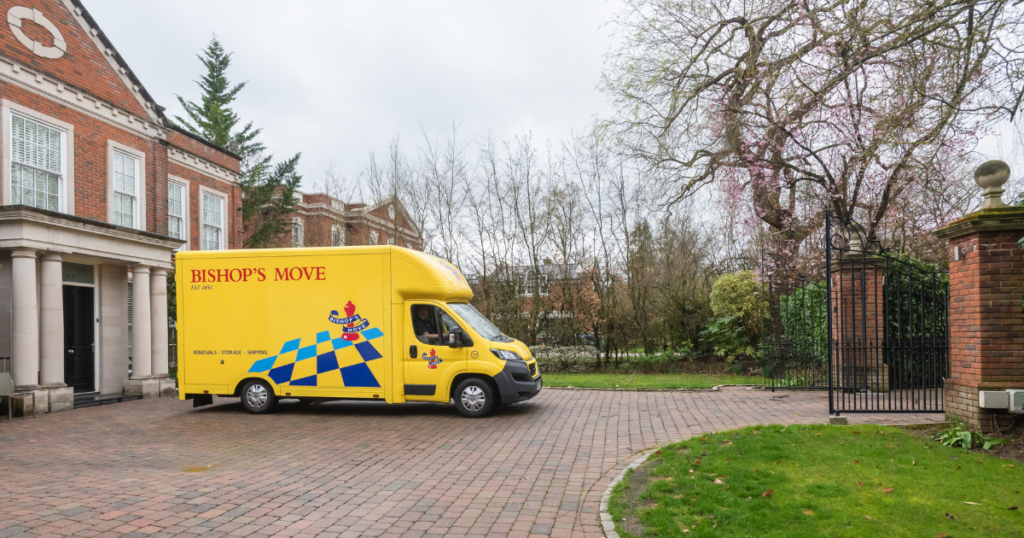
Why choose Bishop’s Move for your move from Ireland to the UK?
Choosing the right international removals company is an important part of planning a successful move from Ireland to the UK. With over 170 years of experience, Bishop’s Move has the expertise and infrastructure required to manage international relocations with care and professionalism.
Our Ireland to UK removals services are tailored to your individual requirements. Whether you are relocating a full household, a smaller shipment, or require additional services such as packing, storage, or insurance, our team will create a solution that fits your needs and timeline.
We take a consultative approach to every move, offering clear advice and practical support from the initial survey through to final delivery. With dedicated international removals specialists overseeing your relocation, you can be confident that your belongings are in safe hands throughout the journey.
Moving from Ireland to the UK FAQs
No, Irish citizens do not need a visa to live or work in the UK, thanks to the Common Travel Area agreement between Ireland and the UK. This allows Irish and British citizens to move freely between the two countries.
Yes, Irish citizens who are living in the UK and considered ordinary residents can access NHS healthcare on the same basis as UK residents. Registering with a local GP is usually the first step.
Depending on your circumstances, customs declarations may be required when transporting personal belongings. An experienced international removals company like Bishop’s Move can help ensure the correct paperwork is completed.
Yes, in general, pets can be brought to the UK from Ireland, but they must meet the requirements of the UK Pet Travel Scheme, including microchipping, rabies vaccination, and appropriate documentation.
Timescales vary depending on your location, shipment size, and service requirements. We can advise on expected timings based on your specific move to ensure a timeline that fits your needs and is realistic.
The cost of moving from Ireland to the UK will vary depending on several factors, including the volume of belongings being moved, the distance involved, access at both properties, and any additional services required, such as packing, storage, or insurance.
Because every move is different, the most accurate way to determine cost is through a professional removals survey, which allows a tailored quotation to be provided based on your specific requirements.